
Highlights of MNRE: A 40 GW Project Pipeline Advances Into a New Era of Resilient Renewable Growth
India’s journey towards renewable energy is about to take a radical turn. According to the latest report from the Ministry of New and Renewable Energy (MNRE), the country is now focusing on long-term integration, resilience, and dependability of clean energy systems rather than rapid expansion.
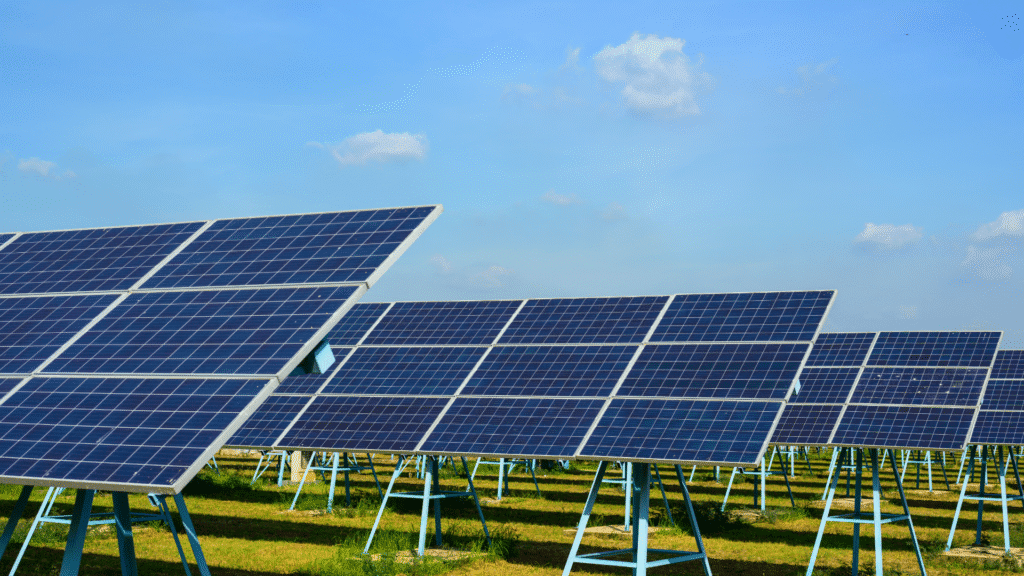
Over the past ten years, India’s renewable capacity—aside from large hydro—has grown from less than 35 GW in 2014 to over 197 GW today.
Strength in Progress: 40 GW Pipeline Underway
According to the MNRE, more than 40 GW of renewable energy projects are presently in advanced stages of development, including transmission connectivity, Power Purchase Agreements (PPAs), and Power Sale Agreements (PSAs).
Furthermore, state and federal agencies have submitted 9 GW of new projects this year, and the commercial and industrial sectors are anticipated to contribute an additional 6 GW in 2025.
India’s multifaceted strategy for achieving its ambitious green energy targets is reflected in this multi-pathway expansion model.
Focus on Storage, Stability, and Sustainability
The government’s ₹2.4 lakh crore transmission expansion plan is another cornerstone of this evolution. The plan aims to unlock over 200 GW of renewable potential, with inter-regional transmission capacity expected to increase from 120 GW to 168 GW by 2032.
This strategic infrastructure upgrade, including the introduction of high-voltage direct current (HVDC) corridors, will ensure that renewable power flows efficiently across regions, balancing demand and supply at scale.
Strengthening Infrastructure for the Future
Another important component of this development is the government’s plan to expand transmission for ₹2.4 lakh crore. With interregional transmission capacity predicted to rise from 120 GW to 168 GW by 2032, the plan seeks to unlock more than 200 GW of renewable potential.
High-voltage direct current (HVDC) corridors and other strategic infrastructure improvements will guarantee that renewable energy moves across regions effectively, balancing supply and demand at scale.
India’s Renewable Maturity: A Model for Sustainable Growth
India’s clean energy transition is maturing, moving from merely adding capacity to system integration and efficiency, according to the MNRE report.
The nation is establishing a standard for the global clean energy transition with its advancements in energy storage, offshore wind, and hybrid systems.
REMA’s View
Cooperation between local associations, solar dealers, and government agencies is becoming increasingly more important as India’s renewable energy ecosystem develops.
In order to overcome industry obstacles, foster trust, and guarantee that all solar stakeholders contribute to this national vision, organizations such as REMA (Renewable Energy Manufacturers Association) are essential.